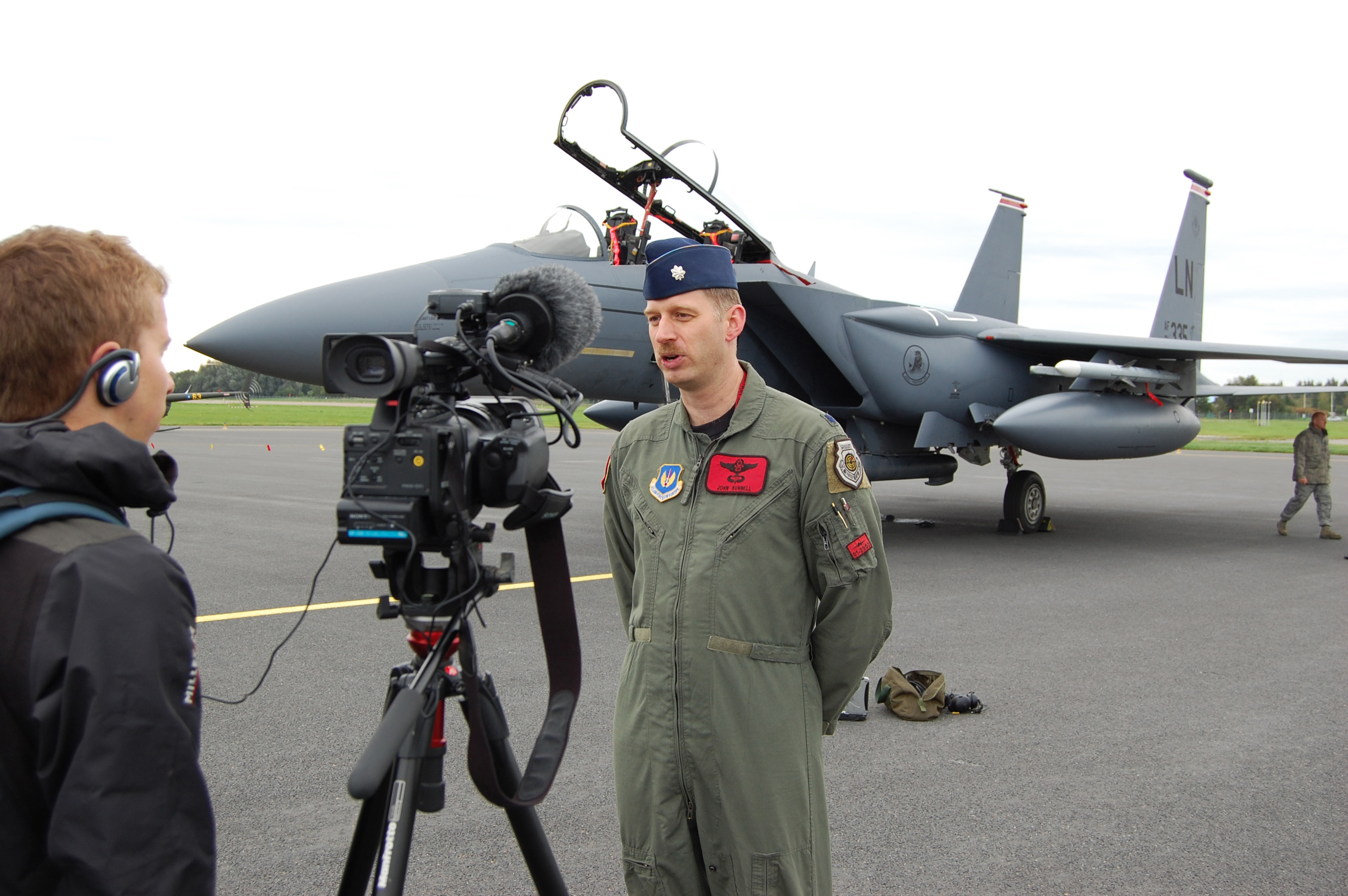
What drew John “Bugs” Bunnell to the Air Force was the same thing that pulled him to GTRI: advanced technology and service.
He began his 28-year Air Force career as a backseater who managed combat duties in the F-15E Strike Eagle. Eventually, he commanded the 494th Fighter Squadron and served in war zones from Kosovo to Iraq and Afghanistan. During his early years in a fighter squadron, he earned the nickname “Bugs,” a play on Bunnell’s last name that stuck throughout his military career and followed him to GTRI.
His current role at GTRI started with his final Air Force duty. As director of Air Force Tactical Exploitation of National Capabilities, his team rapidly developed and prototyped technologies that delivered space-collected information to warfighters. When GTRI recruited him to its Colorado Springs field office, Bunnell was ready to retire from the Air Force and begin a second career — as long as he could continue serving the country.
“The transition to GTRI was easy,” he said. “I feel like I’m still serving.”
GTRI’s unique workforce is partly why that transition was so seamless. Bunnell, who holds a degree in aeronautical engineering, works with fellow veterans and researchers who pair technical expertise with firsthand knowledge of military missions.
“If you can find veterans who have a significant knowledge of military goals, combined with science and engineering degrees, that's really powerful,” he said.
Today, Bunnell leads the Colorado Springs field office while helping expand GTRI’s military space portfolio. He works closely with the U.S. Space Force and U.S. Space Command to identify emerging challenges and determine how GTRI’s technologies can help address them.
“The military places great trust in us, and they understand we bring engineering expertise they don't have to the problem,” Bunnell said. “Whether or not we help them solve these problems will determine if we win or lose a war in the future. What we do is tremendously important.”