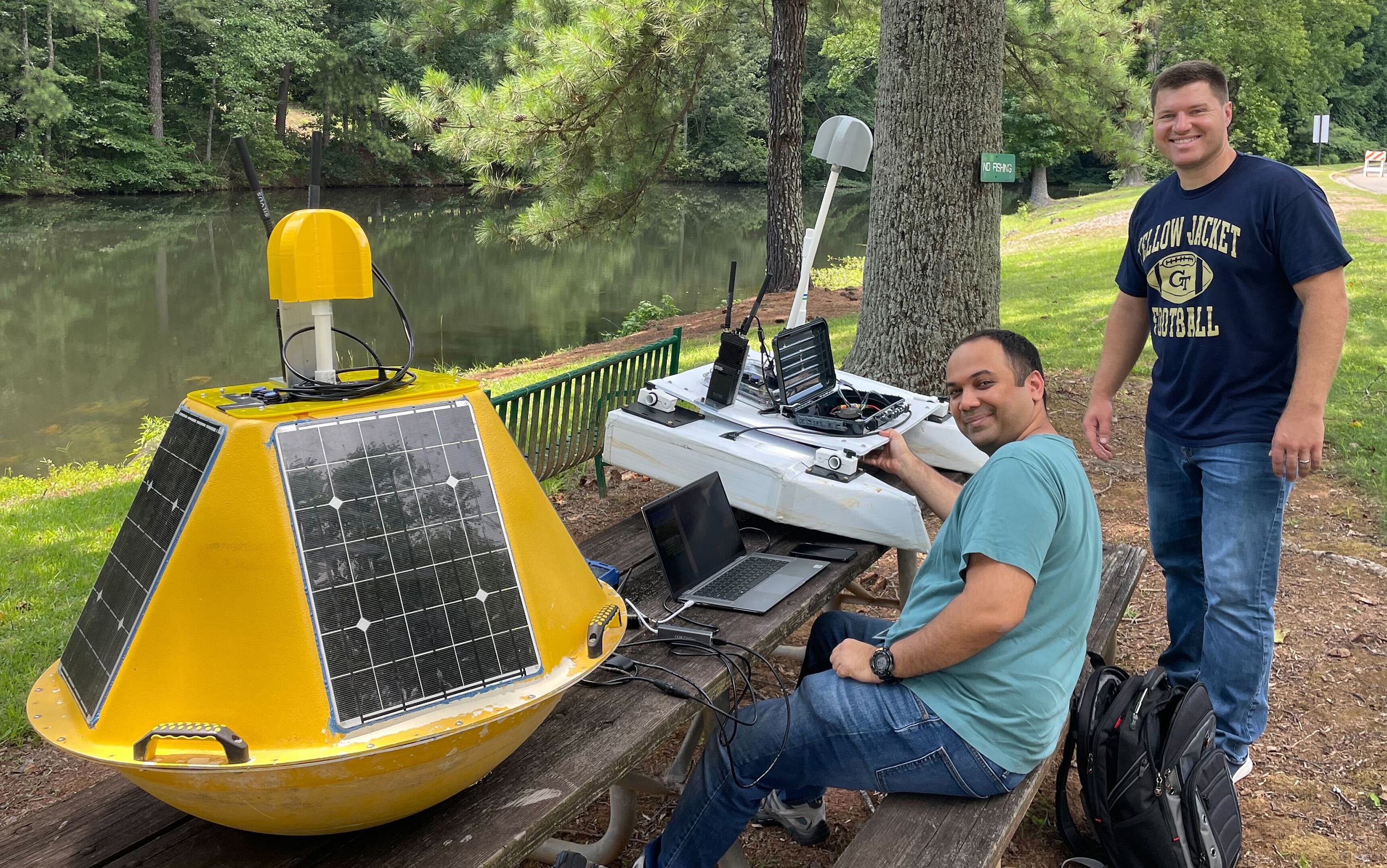
While viewers watched NASA’s Artemis II crew return to Earth off the coast of San Diego on April 10, 2026, Georgia Tech Research Institute (GTRI) researchers were listening in a different way. From a suburban site about 15 miles inland, their compact array of sensors recorded low-frequency sound consistent with the Orion spacecraft’s hypersonic reentry.
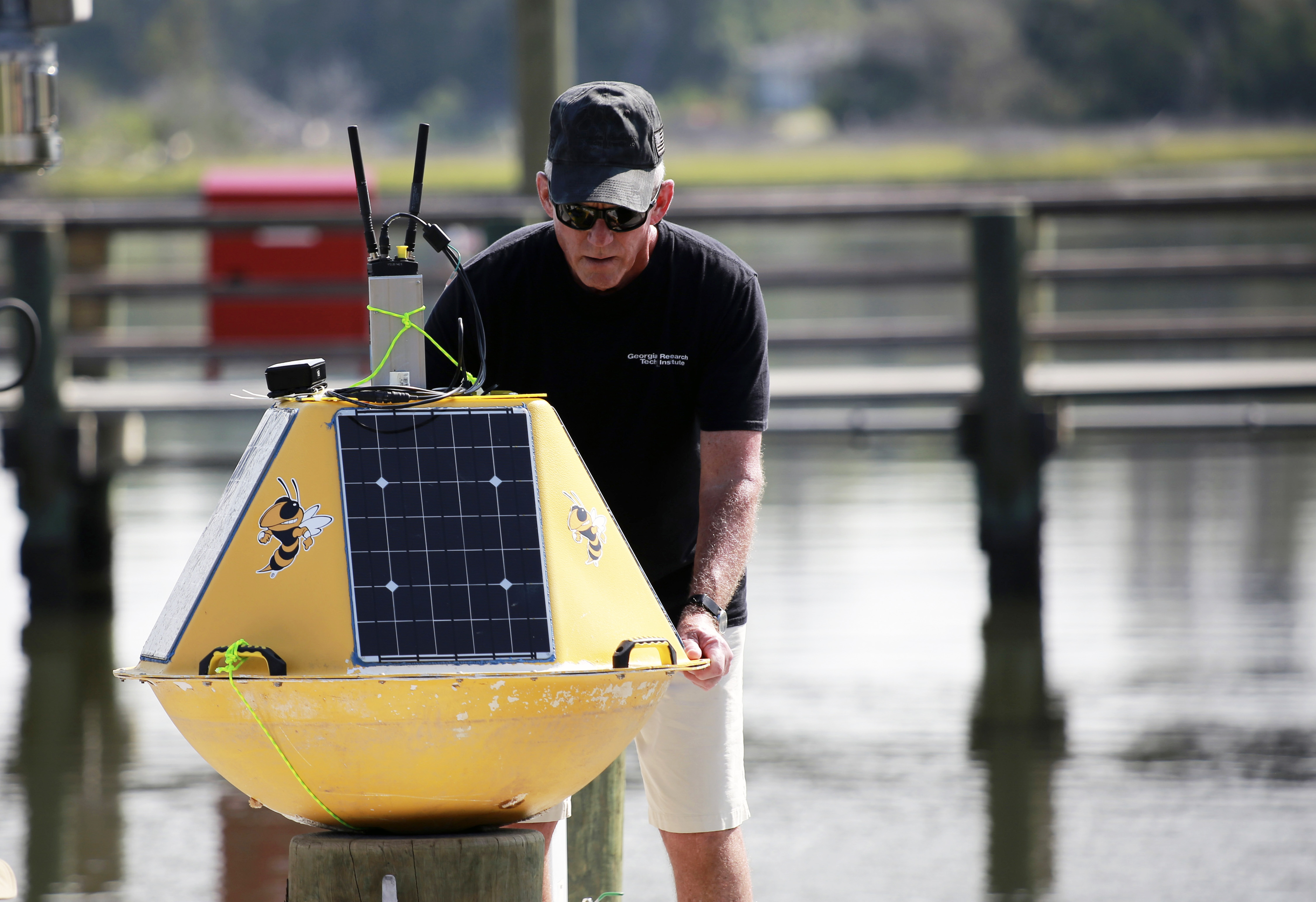
The field experiment provided a real-world test for the technology behind the Maritime Environmental Research and Monitoring for Advanced Infrasound Detection (MERMAID) system. GTRI researchers are developing MERMAID to explore how small, relatively inexpensive acoustic sensors can be used together for persistent, passive monitoring.
“The Artemis II return gave us a rare opportunity to evaluate MERMAID against a well-documented, high-energy atmospheric event,” said Mike “Scratch” Fitzpatrick, a principal research engineer in GTRI’s San Diego Field Office. “Our array recorded a coherent signal during the expected reentry window and estimated an arrival direction consistent with the spacecraft’s offshore reentry corridor.”
Listening Below the Range of Human Hearing
Infrasound consists of acoustic waves below 20 hertz, generally too low in frequency for people to hear. Infrasound can be generated by natural events such as volcanic eruptions, earthquakes, severe storms and ocean waves, as well as by explosions, ships, aircraft, spacecraft, and other natural and human-generated sources. Under favorable atmospheric conditions, infrasound can travel hundreds or even thousands of miles and can diffract around terrain and structures. These waves can be measured using small, relatively inexpensive acoustic arrays.
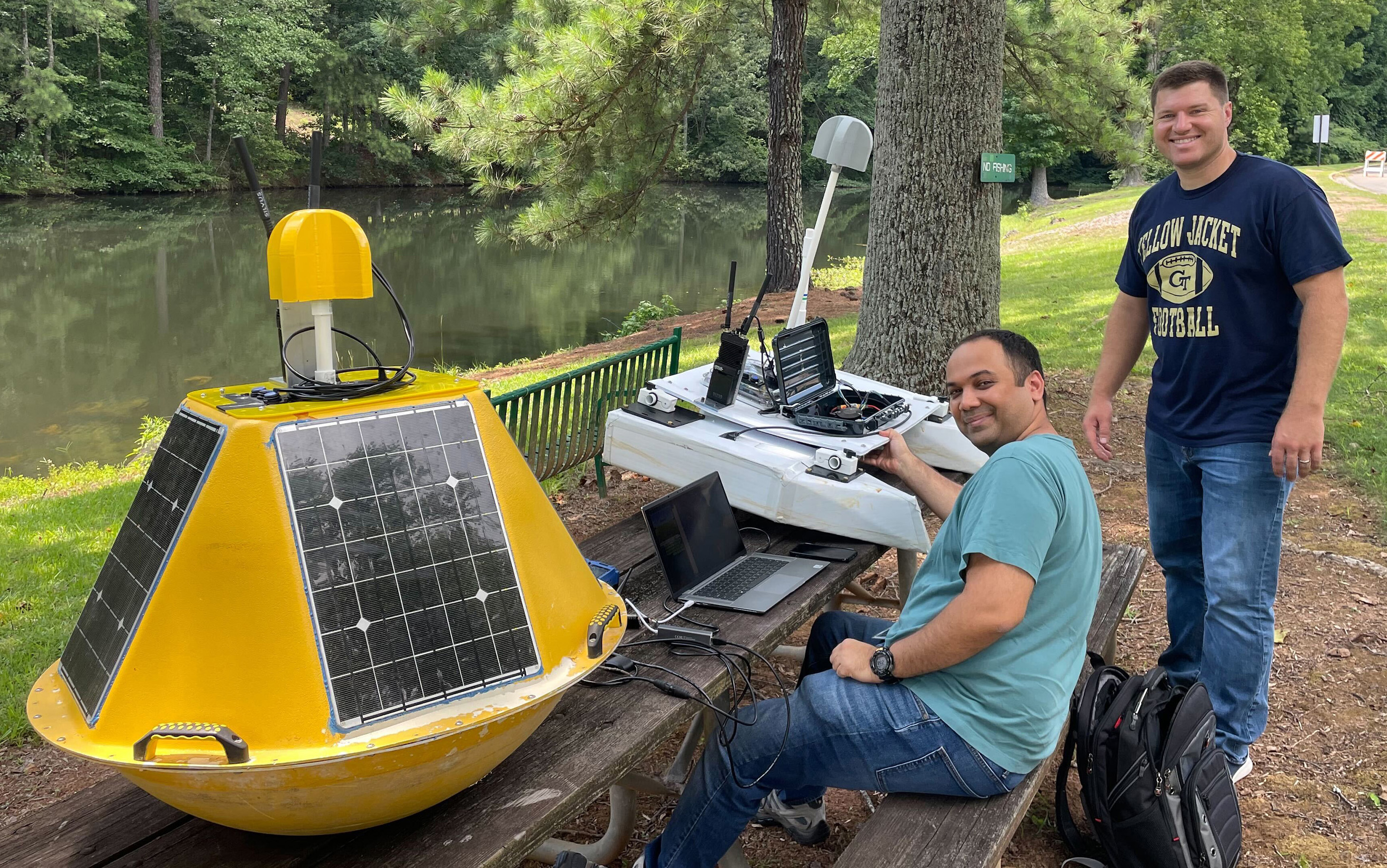
GTRI researchers have studied infrasound applications for years and are now extending that work to maritime and distributed sensing. MERMAID combines synchronized sensors with array-processing methods that look for signals arriving coherently across multiple instruments. Measuring the small differences in arrival time among the sensors allows researchers to estimate the direction from which a signal came.
A Rare Test Opportunity
Artemis II was NASA’s first crewed Artemis flight and the first crewed mission around the Moon in more than 50 years. NASA astronauts Reid Wiseman, Victor Glover, and Christina Koch, and Canadian Space Agency astronaut Jeremy Hansen, launched aboard Orion on April 1 and completed a nine-day journey around the Moon before returning on April 10.
During reentry, Orion reached Earth’s atmosphere at approximately 23,864 mph, nearly 35 times the speed of sound, placing it well within the hypersonic flight regime. For Artemis II, NASA used a directed, lofted entry trajectory rather than the full skip-entry profile flown during Artemis I. The spacecraft splashed down safely in the Pacific Ocean off San Diego at 5:07 p.m., PDT and was recovered with support from the U.S. Navy.
“Artemis II generated a lot of interest in San Diego, and we took advantage of this opportunity to learn more about what MERMAID can do in a real-world setting,” Fitzpatrick said.
Three Sensors, One Coherent Arrival
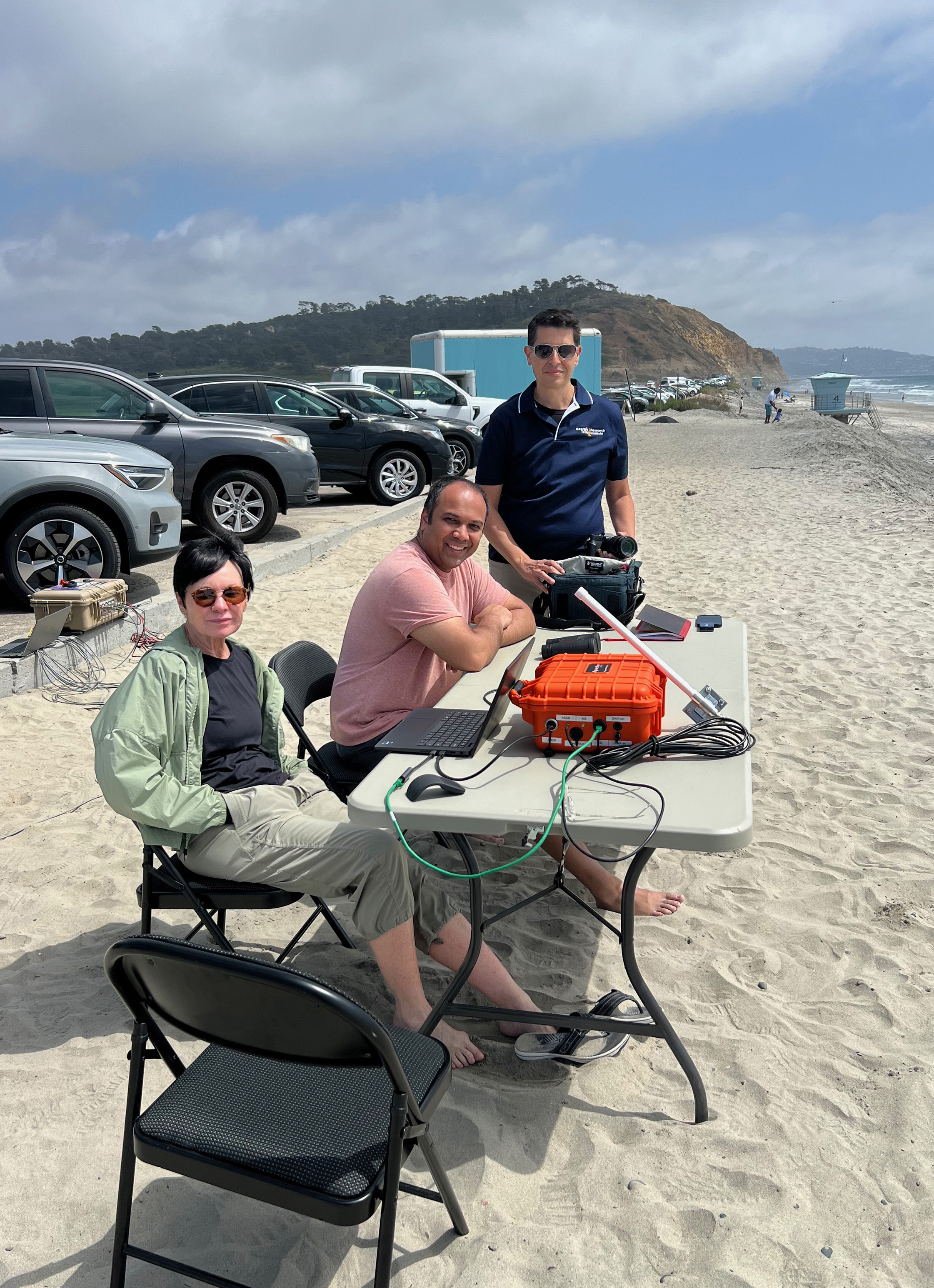
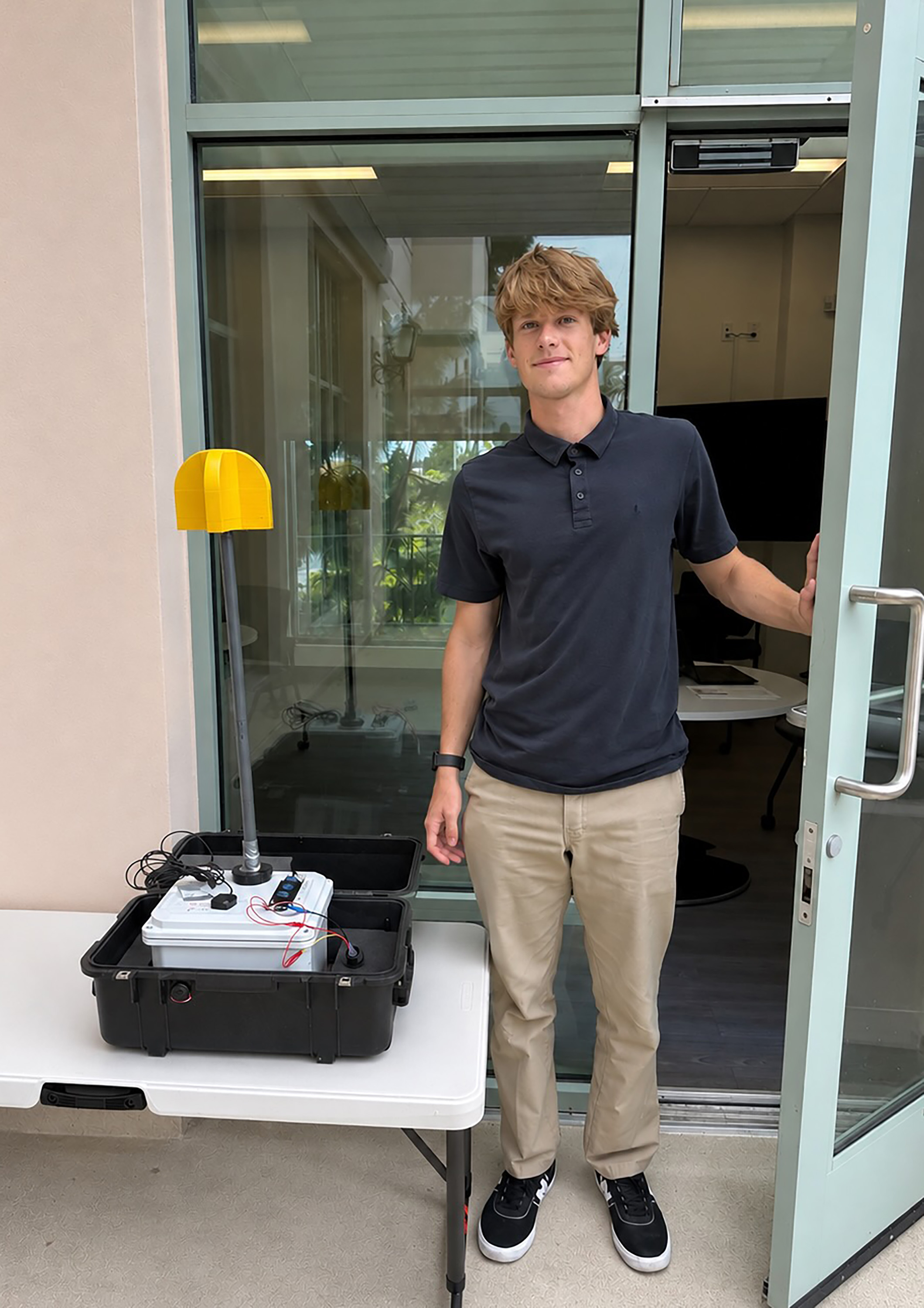
For the experiment, the team placed three synchronized MERMAID sensor payloads at the corners of a triangle. The geometry formed a compact acoustic array capable of distinguishing a coherent arrival from background noise common in a suburban environment inland from the Pacific coastline.
The array recorded continuously through the expected reentry period. The sensors were aligned in time using a synchronization method developed by the team. Preliminary analysis identified a coherent low-frequency event at approximately 5:03 p.m. PDT. The estimated arrival bearing was about 225 degrees, consistent with the offshore reentry corridor southwest of the array. Frequency-wavenumber analysis provided an additional check on the directional estimate, and the waveform contained broadband low-frequency energy consistent with what would be expected from a strong atmospheric shock.
The analysis associated the event with Orion using several independent clues: the time of arrival, estimated direction, coherence across all three sensors, waveform characteristics, and NASA’s publicly documented trajectory. The compact array provided an arrival bearing rather than a complete independent position or continuous track.
Building Toward Distributed Sensing
The demonstration showed that a small array could detect and estimate the arrival direction of a low-frequency signal associated with a high-energy event from a noisy inland location. It also gave the research team a valuable dataset for improving synchronization, signal processing, and field-deployment methods.
“This is an important step because it moves the work from controlled testing to a real event with known timing and trajectory,” Fitzpatrick said. “The next phase is to repeat the experiment with various vehicles and platforms, compare results across geographically separated sites, and quantify performance under different atmospheric and environmental conditions.” Importantly, Fitzpatrick added, the results support further evaluation of distributed infrasound sensing as a capability complementary to traditional sensing techniques such as radar, radio-frequency (RF), and electro-optical systems.
Networks of separated infrasound arrays could eventually complement radar, radio-frequency, optical, and other sensing systems. Potential applications include monitoring energetic atmospheric events, supporting research on supersonic and hypersonic flight, and adding a passive, low-cost layer to wider sensing architectures. Additional arrays and data sources would be needed to localize or track a source over time.
According to Fitzpatrick, the Artemis II field demonstration illustrates MERMAID’s potential to support continued research and future applications, including:
• Persistent monitoring of energetic atmospheric and maritime events
• Research on acoustic signatures from supersonic and hypersonic flight
• Wide-area passive sensing where conventional sensors may be limited
• Low-cost augmentation of existing sensing architectures
Although the Artemis observation represents a single field demonstration, it offers a compelling proof of concept: a compact, low-cost array operating in an ordinary suburban environment detected a signal associated with one of the most demanding phases of human spaceflight. For the MERMAID team, the result is not an endpoint, but a foundation for future experiments using additional arrays, varied platforms, and complementary sensor data.
A Collaborative Research Effort
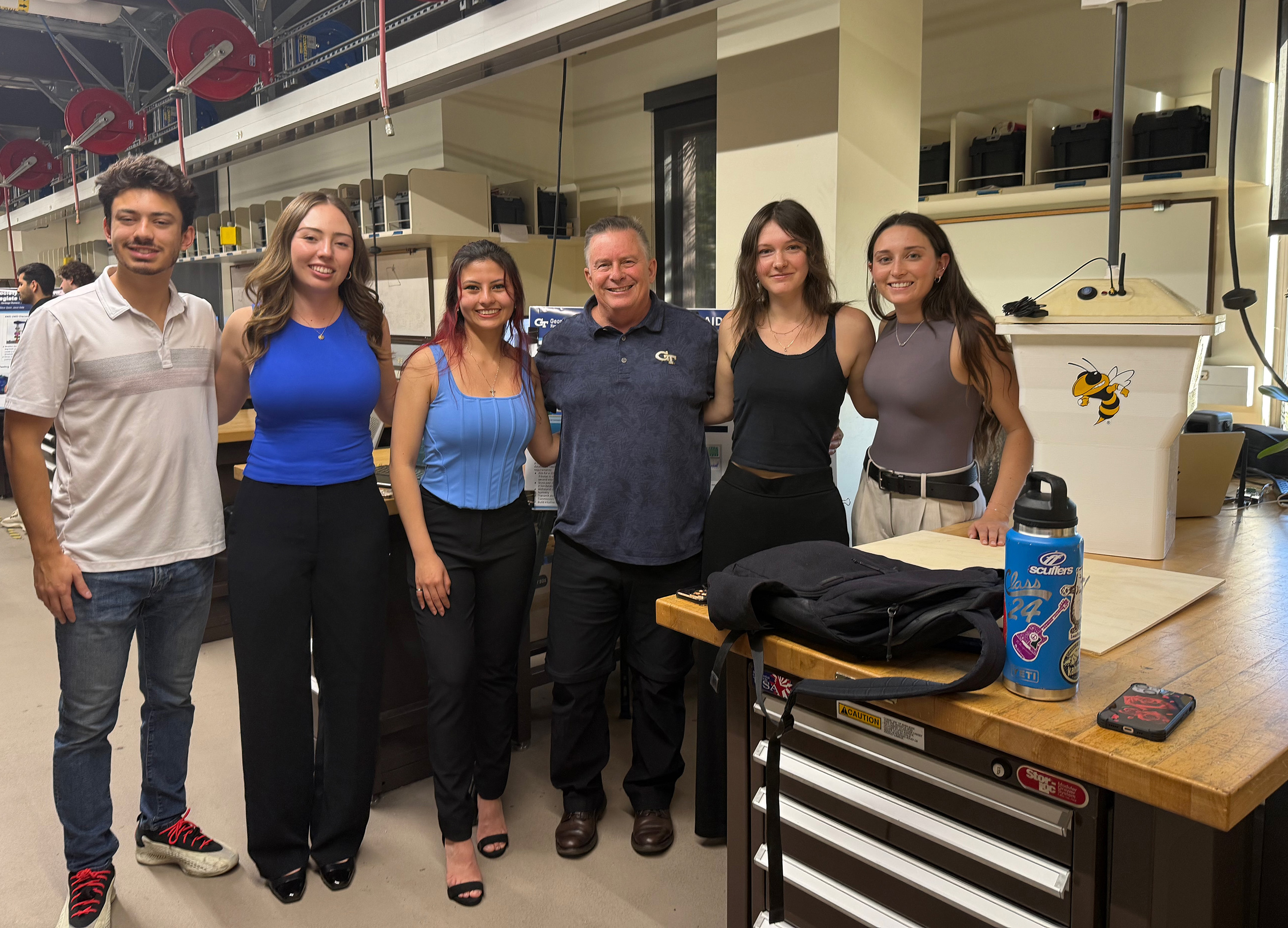
The MERMAID work has been supported by GTRI’s Independent Research and Development program. Rusty Roberts, director of GTRI’s Aerospace, Transportation and Advanced Systems Laboratory (ATAS), has supported the MERMAID program and participated in its early experimental efforts. GTRI contributors included Principal Research Engineer Alessio Medda and Senior Research Engineer Aprameya Satish. San Diego State University mechanical engineering intern Tanner Renken supported system implementation, integration and field testing. Laure Fitzpatrick assisted with early coastal field research in San Diego, and a University of San Diego capstone team contributed to system development, testing, and refinement.
ABOUT GTRI: The Georgia Tech Research Institute (GTRI) is the nonprofit, applied research division of the Georgia Institute of Technology (Georgia Tech). Founded in 1934 as the Engineering Experiment Station, GTRI has grown to nearly 3,000 employees, supporting eight laboratories in over 20 locations around the country and performing more than $1 billion of problem-solving research annually for government and industry. GTRI's renowned researchers combine science, engineering, economics, policy, and technical expertise to solve complex problems for the U.S. federal government, state, and industry.
GTRI Communications
Georgia Tech Research Institute
Atlanta, Georgia USA

Related News