Subscribe & Contact
  • Join GTRI
  • Subscribe
  • Contact Us
  • About
    • Mission & Vision
    • Facilities
    • Leadership
    • Ethical Standards
    • Conference Center
    • History >
  • Expertise
    • Sensors
    • Information
    • Systems
    • Technology for Society
  • Impact
    • Economic Impact for Georgia
    • Educate Future Technology Leaders
    • Improve the Human Condition
    • National Security
  • Outreach
    • Veterans
    • K 12 STEM
    • Professional Education
    • STING
    • MGRP
  • Careers
    • Life at GTRI
    • Benefits
    • Research Positions >
    • Staff Positions >
    • Graduate Students
    • University Students
    • High School Internships
  • News
    • All News
    • All Headlines
    • All Features
    • Newsletter
    • Podcast
    • Annual Report
    • Media Inquiries
site-logo
Main Menu
  • About
  • Expertise
  • Impact
  • Outreach
  • Careers
  • News
Search
  • Facebook
  • LinkedIn
  • YouTube
  • Twitter/X
  • Instagram
About Mega Menu
  • Mission & Vision
  • Facilities
  • Leadership
  • Ethics & Compliance
  • Conference Center
  • History >
Expertise
  • Sensors
  • Information
  • Systems
  • Technology for Society
Impact Mega Menu
  • National Security
  • Economic Impact for Georgia
  • Improve the Human Condition
  • Educate Future Technology Leaders
Outreach Mega Menu
  • Veterans
  • Professional Education
  • K 12 STEM
  • STING
  • MGRP
Careers Mega Menu
  • Life at GTRI
  • Benefits
  • Research Positions >
  • Staff Positions >
  • Graduate Students
  • University Students
  • High School Internships
News Mega Menu
  • All News
  • All Features
  • All Headlines
  • Newsletter
  • Podcast
  • Annual Report
  • Media Inquiries
Researcher tests lightning mapping array units
  • News Feature Stories

Georgia Tech Lightning Mapping Array Helps Protect World Cup Visitors

07.10.2026 | John Toon

As soccer enthusiasts from around the globe made their way to World Cup matches and visited outdoor FIFA Fan Festival events in Atlanta, a lightning tracking system operated by the Severe Storms Research Center (SSRC) at the Georgia Tech Research Institute (GTRI) was providing weather forecasters information that could help protect the fans.
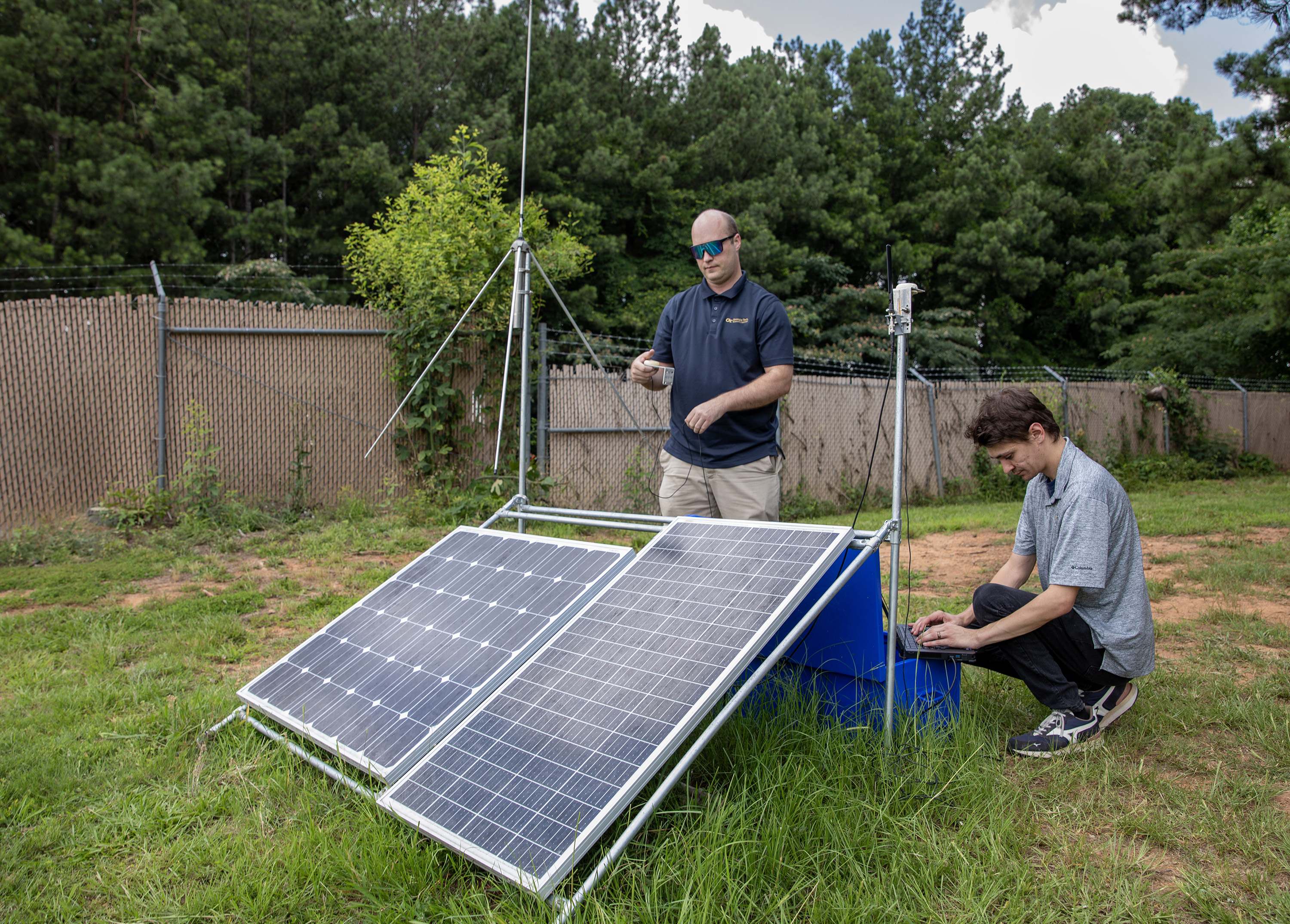
 

Researchers set up a lightning mapping array.
GTRI researchers set up a lightning mapping array at a location near Atlanta. (Credit: Sean McNeil)

The North Georgia Lightning Mapping Array (NGLMA) uses specialized detection equipment to generate detailed maps of the lightning that occurs in the metropolitan Atlanta area. Through a collaboration between GTRI and the National Weather Service (NWS), the array provided continuous lightning information to agencies responsible for visitor safety.
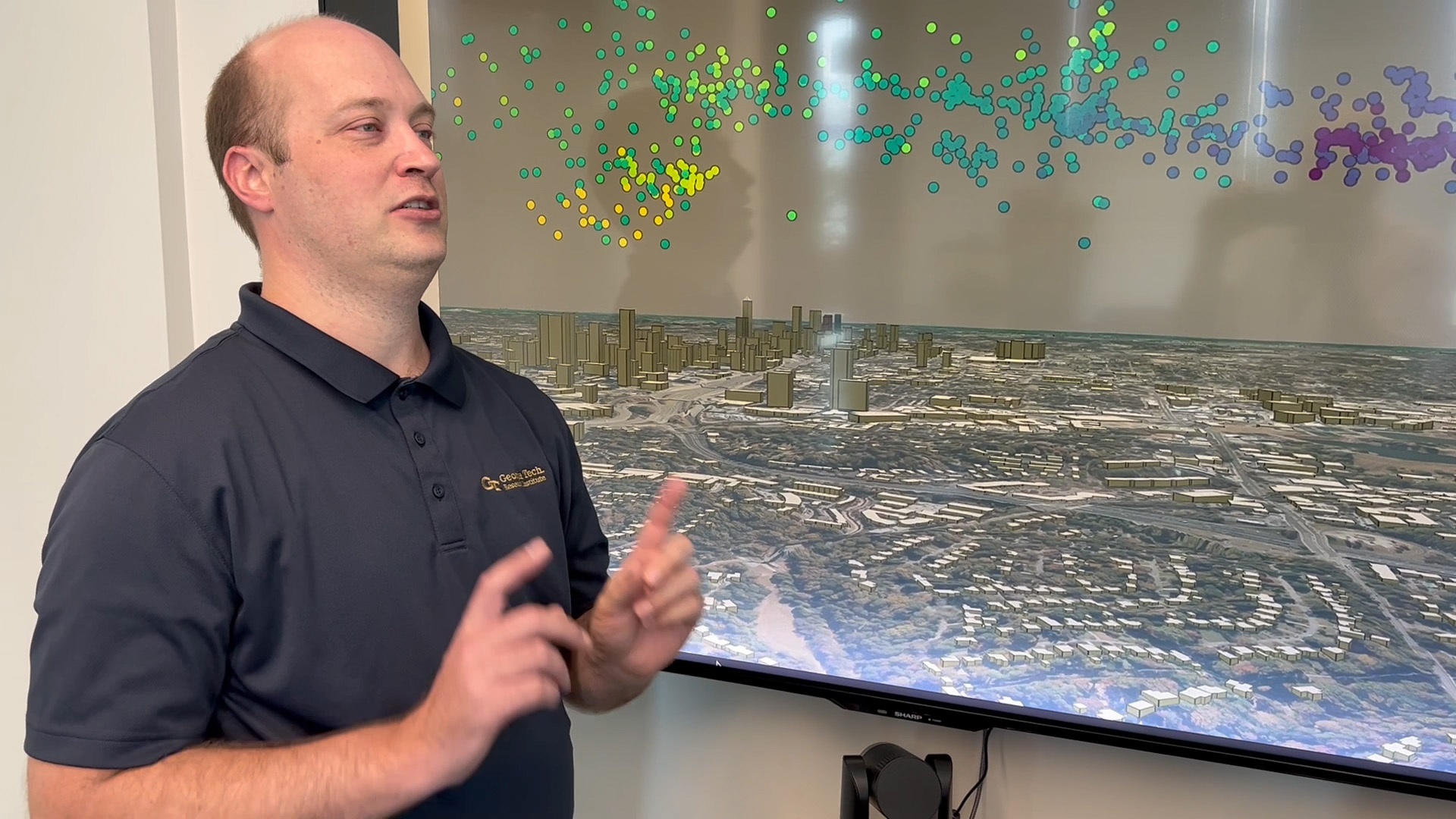
 

Researcher explains screen showing lightning over Atlanta
Researcher Michael Peterson with screen showing lightning “sources” (colored dots), which are the parts that make up a flash. Here the sources are shown in three dimensions above Atlanta. (Credit: John Toon, GTRI)

“The North Georgia Lightning Mapping Array is providing decision-support information to agencies responsible for protecting events in Atlanta related to the World Cup,” said Michael Peterson, director of the GTRI Severe Storms Research Center (SSRC) that operates the array. “The system has been up and running and gave us excellent measurements of the thunderstorms that occurred in mid-June. It complements the other sources of weather information that the agencies have available.”
 

The array consists of nine instruments that detect both cloud-to-ground and cloud-to-cloud lightning flashes. The detection data is then reported to a central computer system that calculates the lightning location in three dimensions. The LMA provides a comprehensive view of lightning activity in the north Georgia area, allowing SSRC researchers to study lightning trends and attributes to better understand severe weather that may occur.
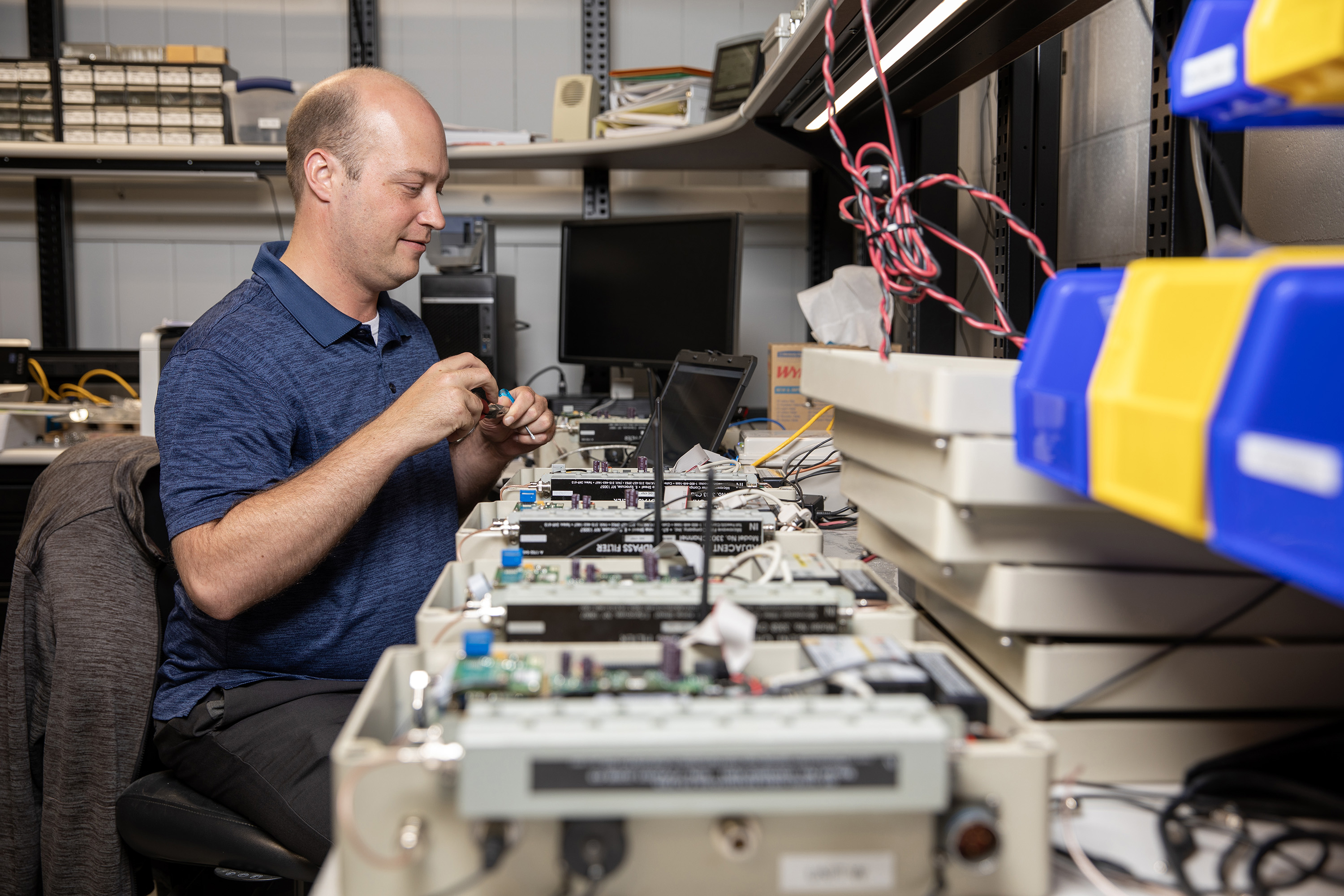
 

Researcher tests lightning mapping units
Researcher Michael Peterson tests lightning mapping array units prior to deployment. (Credit: Sean McNeil, GTRI)

“Operations centers can use our real-time information to see if lightning is occurring in or approaching Atlanta Stadium (otherwise known as Mercedes-Benz Stadium) and other locations,” said Jessica Losego, a GTRI research scientist. “Since the stadium roof is closed, there’s not a lot of concern about lightning during a game for people in the stadium. The concern is for pre-game activities, such as people walking to the stadium, tailgating, and leaving the stadium.”
 

For many years, GTRI has shared information from its lightning sensor network and other weather instruments in real-time with the NWS to support the agency’s severe storm forecasting activities.
 

GTRI is expanding the NGLMA to include additional areas of coverage in Georgia. The array was originally fielded to conduct research into new techniques for predicting severe storms.
 

About the Severe Storms Research Center: The Georgia Tech Research Institute’s Severe Storms Research Center (SSRC) is actively engaged in developing alternative methods of detecting and forecasting severe local storms and exploring improvements to existing storm prediction and sensor technology. The SSRC was established in 1999 after a task force formed by Georgia’s governor recommended creating an organization to coordinate the state’s severe weather forecasting, with funding from the Georgia Emergency Management Agency (GEMA), the Federal Emergency Management Agency (FEMA), and the state of Georgia.
 

About GTRI: The Georgia Tech Research Institute (GTRI) is the nonprofit, applied research division of the Georgia Institute of Technology (Georgia Tech). Founded in 1934 as the Engineering Experiment Station, GTRI has grown to more than 3,000 employees, supporting eight laboratories in over 20 locations around the country and performing more than $964 million of problem-solving research annually for government and industry. GTRI's renowned researchers combine science, engineering, economics, policy, and technical expertise to solve complex problems for the U.S. federal government, state, and industry.

Writer: John Toon (john.toon@gtri.gatech.edu)
GTRI Communications
Georgia Tech Research Institute
Atlanta, Georgia USA

Newsletter

Sign up for monthly updates on GTRI’s research, activity, and more.

More News

Five college students (4 males, 1 female) standing together outdoors, in a row.
05.12.2022 Featured Stories

Your Next Personal Assistant Could be a Drone

Imagine you’re a college student cramming for a test in your dorm room. What if there was a way for the school supplies and food to be delivered right to your dorm – not by car or foot, but by drone?
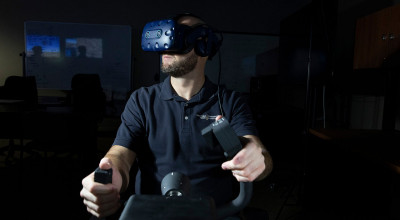
Three young male researchers standing side by side, left one holding VR glasses, center one holding raw whole chicken, right one holding rubber chicken
04.07.2022 Featured Stories

From Virtual Reality to Ice Slurries

In the age of Covid-19, the need for industries to adopt advanced technologies, incorporate more health and safety standards into their daily operations, and maintain a robust workforce is more important than ever.
Portrait photo of Anne Clark
03.22.2022 Featured Stories

Paving the Way for the Next Generation of Female Leaders

Air Force veteran, chief scientist, and academic are just three of the many impressive titles included in GTRI Principal Research Engineer Anne Clark's curriculum vitae.
  • Load More
site-logo
Main Menu
  • About
    • Mission & Vision
    • Facilities
    • Leadership
    • Ethical Standards
    • Conference Center
    • History >
  • Expertise
    • Sensors
    • Information
    • Systems
    • Technology for Society
  • Impact
    • Economic Impact for Georgia
    • Educate Future Technology Leaders
    • Improve the Human Condition
    • National Security
  • Outreach
    • Veterans
    • K 12 STEM
    • Professional Education
    • STING
    • MGRP
  • Careers
    • Life at GTRI
    • Benefits
    • Research Positions >
    • Staff Positions >
    • Graduate Students
    • University Students
    • High School Internships
  • News
    • All News
    • All Headlines
    • All Features
    • Newsletter
    • Podcast
    • Annual Report
    • Media Inquiries

Subscribe to our Newsletter

Subscribe & Contact
  • Join GTRI
  • Subscribe
  • Contact Us
Footer - Legal menu
  • © Copyright Georgia Institute of Technology
  • Legal & Privacy Information
  • EU GDPR Privacy Notice
  • Terms of Use
  • Title IX/Sexual Misconduct
  • Clery Act
  • EEOC/OFCCP