
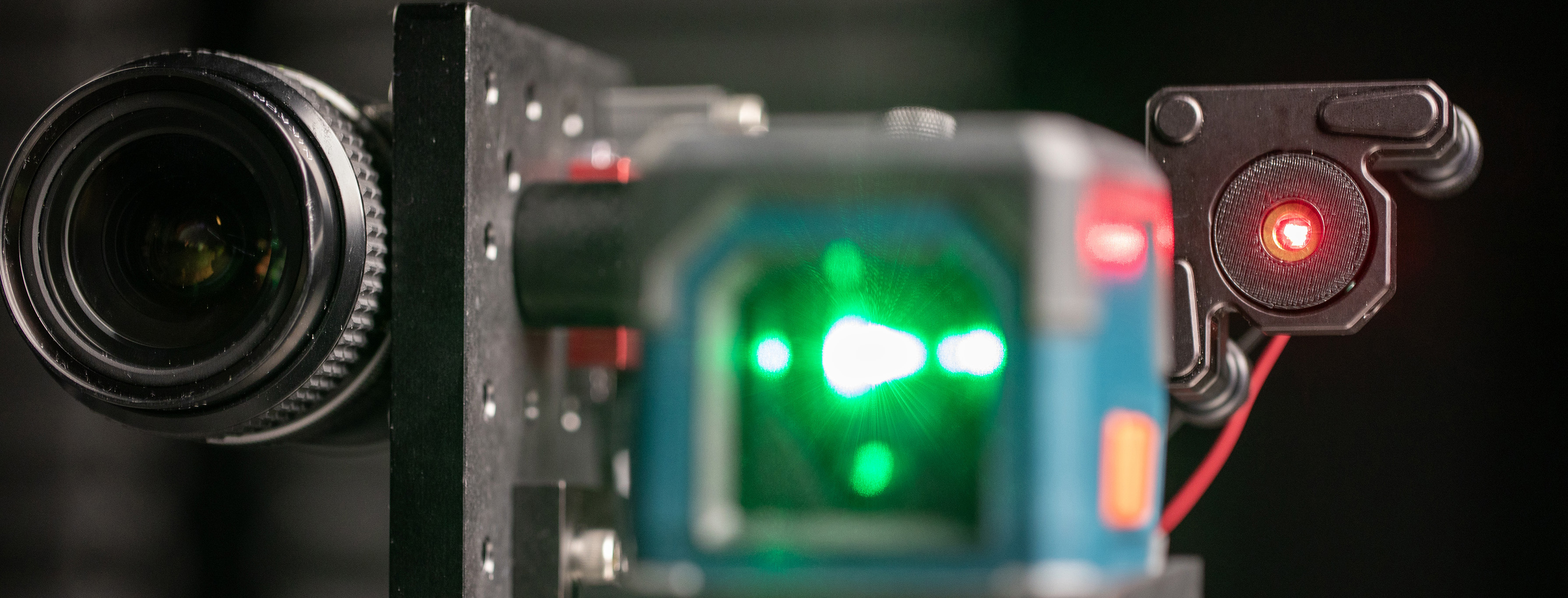



Dual-laser prototype developed using 3D printed materials

Researchers Explore New Remote Sensing Uses for Scheimpflug Principle

03.24.2026
An optical principle discovered more than a century ago may soon find new applications in such areas as monitoring atmospheric turbulence, tracking airborne objects, and mapping the environment.

Related News

News stories
In the early 1990s, our researchers built a 7-foot-tall virtual reality system that let Olympic officials take a virtual tour of Atlanta before the city won the bid.
News stories
A lightning tracking system operated by the Georgia Tech Research Institute (GTRI) provided weather forecasters with information to help protect visitors at World Cup events in Atlanta.
News stories
A new study published July 9 in the journal Nicotine and Tobacco Research demonstrates how artificial intelligence (AI) can be used to automatically detect and classify new e-cigarette devices with screens.
Joseph Greene standing in stairway-looking upward

GTRI Researcher Joseph Greene Receives IEEE-USA McClure Citation of Honor

01.13.2026
GTRI Research Engineer Joseph Greene has received the IEEE-USA George F. McClure Citation of Honor. This national award recognizes exemplary contributions to advancing professional activities for engineers in the United States.

Related News

News stories
In the early 1990s, our researchers built a 7-foot-tall virtual reality system that let Olympic officials take a virtual tour of Atlanta before the city won the bid.
News stories
A lightning tracking system operated by the Georgia Tech Research Institute (GTRI) provided weather forecasters with information to help protect visitors at World Cup events in Atlanta.
News stories
A new study published July 9 in the journal Nicotine and Tobacco Research demonstrates how artificial intelligence (AI) can be used to automatically detect and classify new e-cigarette devices with screens.
ud Ready holds a sample of a perovskite solar cell, along with other samples similar to those launched to the International Space Station.

GTRI Will be Prominent Partner With New Space Research Institute, Says Executive Director Jud Ready

07.09.2025
Dr. W. Jud Ready, longtime leader in space-related research at GTRI for more than two decades, has been appointed as the inaugural executive director of Georgia Tech’s newly established Space Research Institute (SRI).

Related News

News stories
In the early 1990s, our researchers built a 7-foot-tall virtual reality system that let Olympic officials take a virtual tour of Atlanta before the city won the bid.
News stories
A lightning tracking system operated by the Georgia Tech Research Institute (GTRI) provided weather forecasters with information to help protect visitors at World Cup events in Atlanta.
News stories
A new study published July 9 in the journal Nicotine and Tobacco Research demonstrates how artificial intelligence (AI) can be used to automatically detect and classify new e-cigarette devices with screens.

Greg Badura Speaks on Space Imaging

Jul 21, 2025

Featured guest Dr. Greg Badura, a senior research scientist in EOSL, speaks on space imagery research and GTRI’s evolving role in supporting space domain awareness.

In the latest episode of the Georgia Tech Research Podcast, the featured guest is Dr. Greg Badura, a senior research scientist in GTRI’s Electro-Optical Systems Laboratory (EOSL).

More Podcast Episodes

GTRI Director Mike Gazarik, Ph.D., is the featured guest on the latest episode of the Georgia Tech Research Podcast.

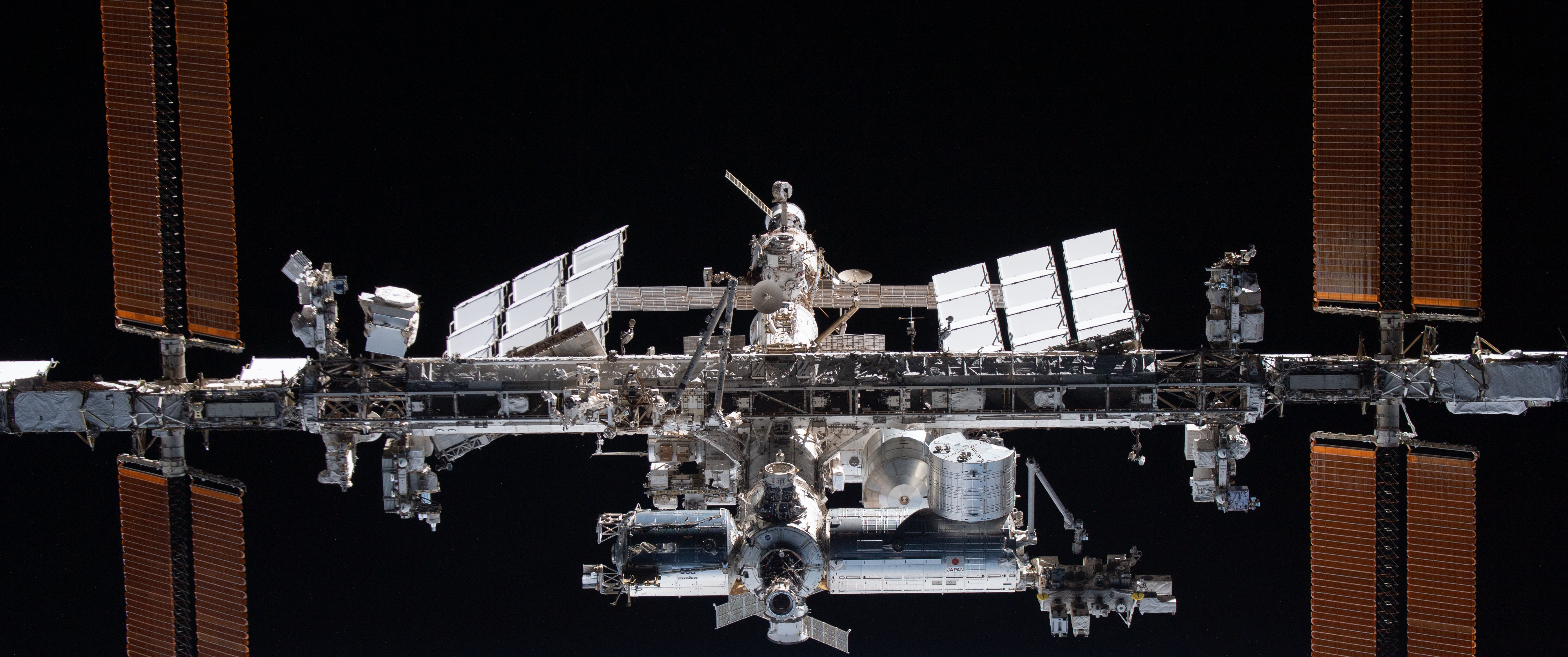
International Space Station

Space Station Testing Will Evaluate Photovoltaic Materials

06.24.2025
Georgia Tech researchers will soon be sending 18 photovoltaic cells to the International Space Station (ISS) for a study of how space conditions affect the devices’ operation over time.

Related News

News stories
In the early 1990s, our researchers built a 7-foot-tall virtual reality system that let Olympic officials take a virtual tour of Atlanta before the city won the bid.
News stories
A lightning tracking system operated by the Georgia Tech Research Institute (GTRI) provided weather forecasters with information to help protect visitors at World Cup events in Atlanta.
News stories
A new study published July 9 in the journal Nicotine and Tobacco Research demonstrates how artificial intelligence (AI) can be used to automatically detect and classify new e-cigarette devices with screens.
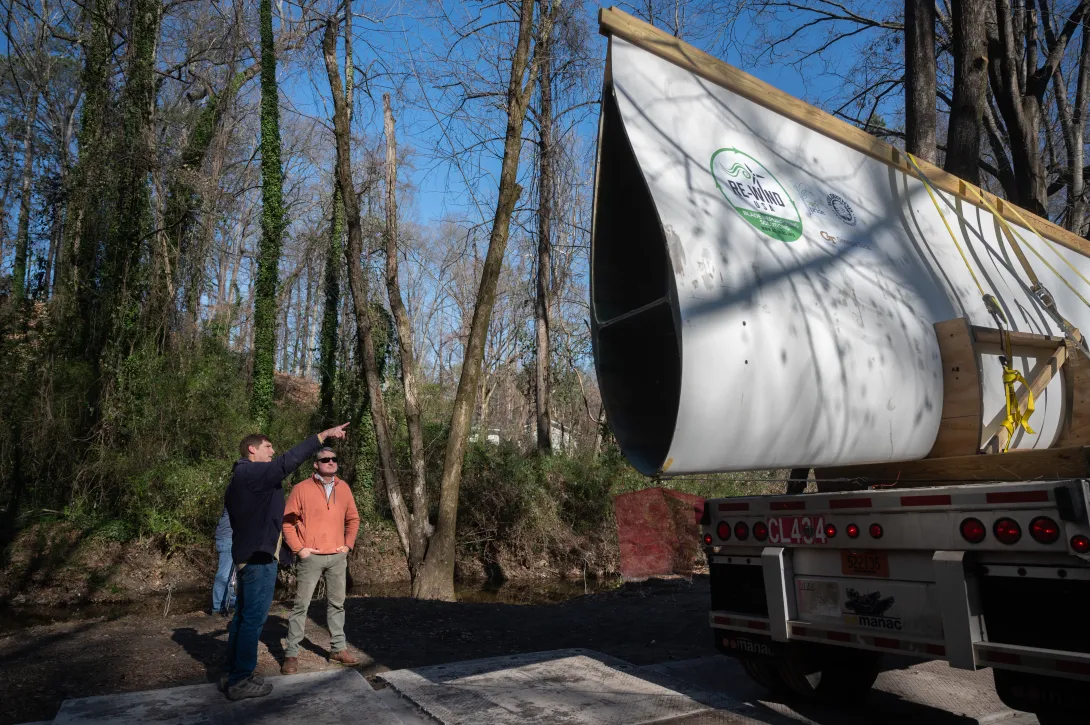
Bridge constructed from wind turbines.

Jud Ready Leads Development of Innovative Bridge Made From Wind Turbine Blades

03.31.2025
In an innovative approach to sustainable infrastructure, Georgia Tech Research Institute Principal Research Engineer Jud Ready has spearheaded the installation of a bridge in Atlanta’s Beaverbrook Park using decommissioned wind turbine blades.

Related News

News stories
In the early 1990s, our researchers built a 7-foot-tall virtual reality system that let Olympic officials take a virtual tour of Atlanta before the city won the bid.
News stories
A lightning tracking system operated by the Georgia Tech Research Institute (GTRI) provided weather forecasters with information to help protect visitors at World Cup events in Atlanta.
News stories
A new study published July 9 in the journal Nicotine and Tobacco Research demonstrates how artificial intelligence (AI) can be used to automatically detect and classify new e-cigarette devices with screens.
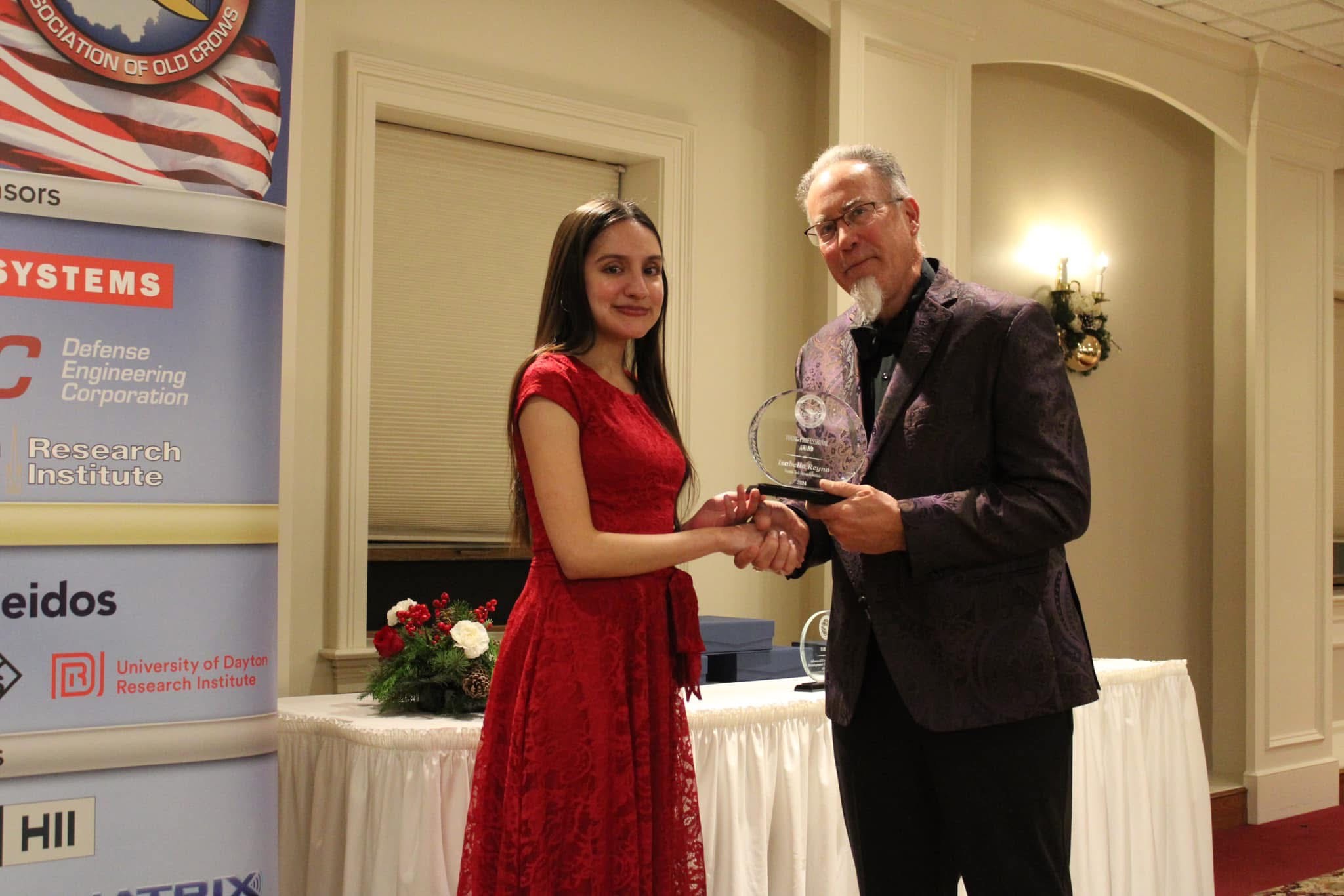
Isabella Reyna--accepting the award from Todd Kastle at the Association of Old Crows (AOC) Christmas party.

Isabella Reyna Honored with Young Professional Award from Association of Old Crows

12.12.2024
Isabella Reyna, a data analyst in the Electronic Systems Laboratory’s (ELSYS) Test Engineering Division (TEN), has received the Young Professional Award from the Association of Old Crows (AOC) Kittyhawk Chapter.

Related News

News stories
In the early 1990s, our researchers built a 7-foot-tall virtual reality system that let Olympic officials take a virtual tour of Atlanta before the city won the bid.
News stories
A lightning tracking system operated by the Georgia Tech Research Institute (GTRI) provided weather forecasters with information to help protect visitors at World Cup events in Atlanta.
News stories
A new study published July 9 in the journal Nicotine and Tobacco Research demonstrates how artificial intelligence (AI) can be used to automatically detect and classify new e-cigarette devices with screens.
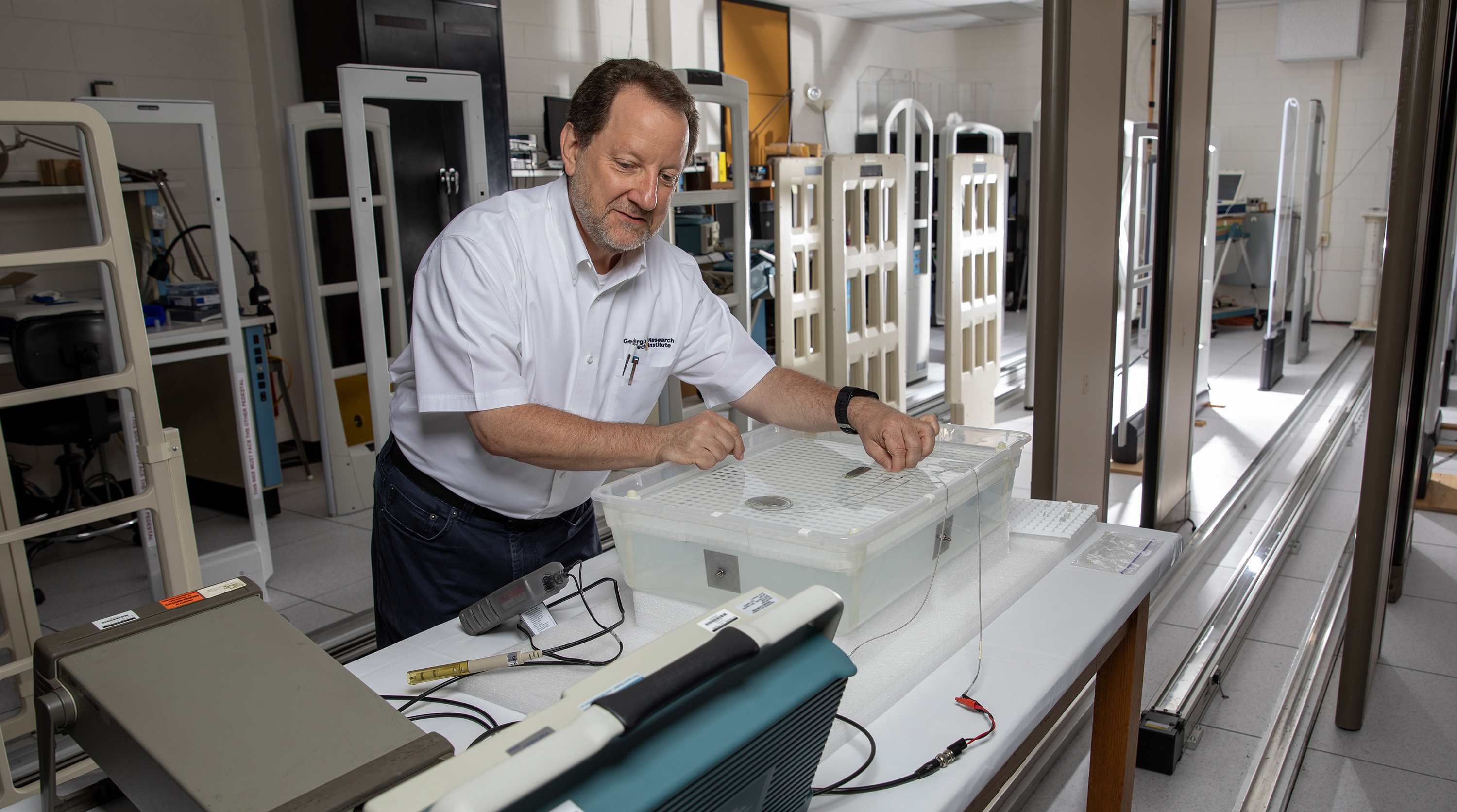
Testing medical devices for interference in a saline tank.

Center Helps Protect Medical Devices from Electromagnetic Interference

07.26.2024
Implantable and wearable medical devices such as pacemakers, defibrillators, glucose monitors, nerve stimulators, and drug-infusion pumps are increasingly being used to improve human health. Researchers in GTRI's Medical Device Test Center are helping protect these devices from potential electromagnetic interference.

Related News

News stories
In the early 1990s, our researchers built a 7-foot-tall virtual reality system that let Olympic officials take a virtual tour of Atlanta before the city won the bid.
News stories
A lightning tracking system operated by the Georgia Tech Research Institute (GTRI) provided weather forecasters with information to help protect visitors at World Cup events in Atlanta.
News stories
A new study published July 9 in the journal Nicotine and Tobacco Research demonstrates how artificial intelligence (AI) can be used to automatically detect and classify new e-cigarette devices with screens.

Exploring Art and AI in Georgia Tech's School of Literature, Media, and Communication

Georgia Tech Ivan Allen College of Liberal Arts
https://iac.gatech.edu/news-events/features/2023/07/georgia-tech-art-ai

School of Literature, Media, and Communication (LMC) resident painter Mark Leibert for years has turned to algorithms and computational methods to help inspire and refine his work.

Leibert and collaborators from the Georgia Tech Research Institute (GTRI) have gone even further, recruiting a team of student researchers in the Art & AI Vertically Integrated Project (VIP) to explore the artistic implications of AI and the technological implications of art. In fact, they were well ahead of the recent public buzz over artificial intelligence tools, having launched four years ago.

Leibert is now working with Ethan Trewhitt, another GTRI researcher, who helps students dig deeper into the sometimes mystifying ways in which AI and artistic intent interact.