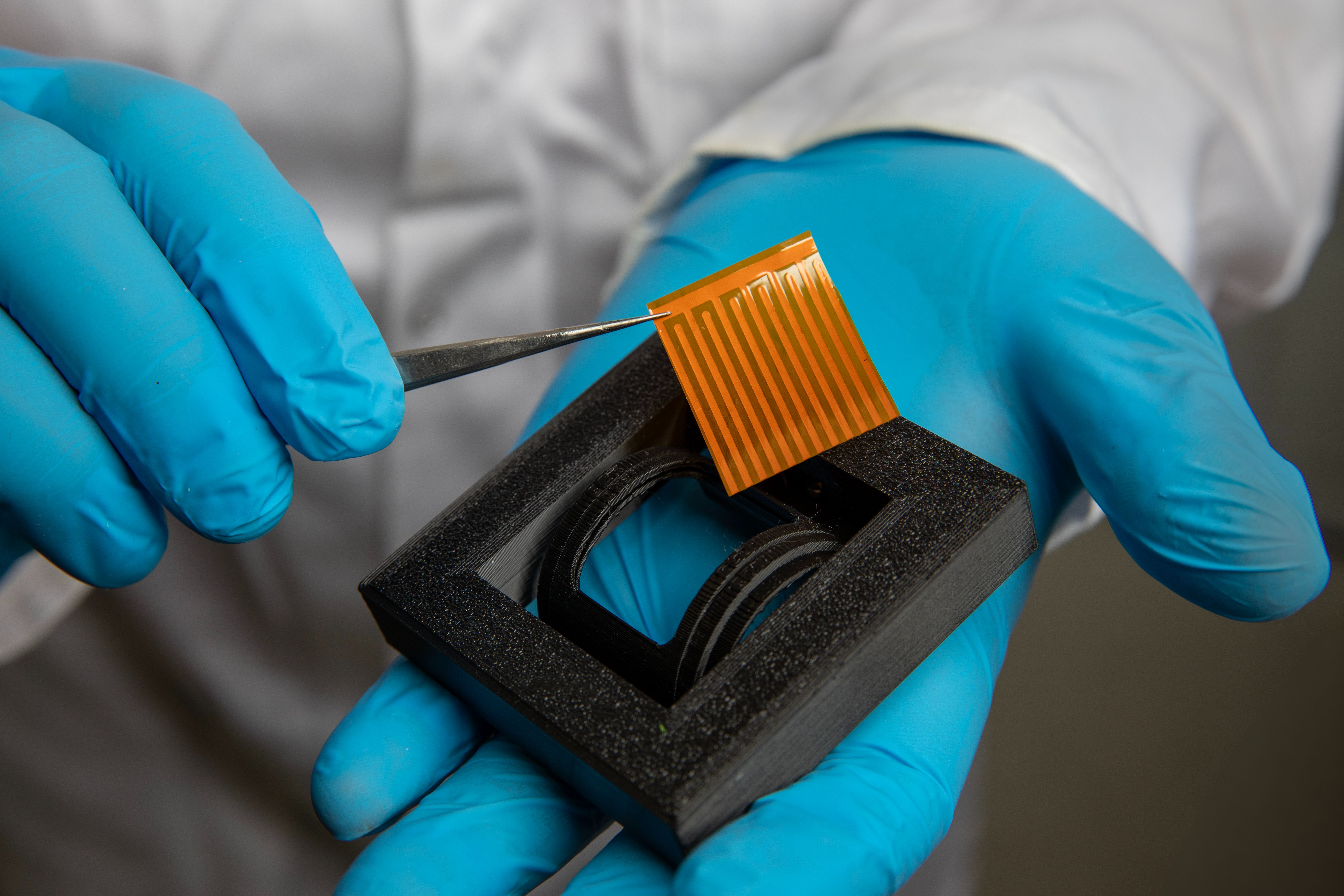
Researchers at the Georgia Tech Research Institute (GTRI) and Georgia Institute of Technology (Georgia Tech) are sending experimental polymer materials to the International Space Station (ISS) as part of the MISSE-22 mission to better understand how they withstand real space conditions.
Mounted outside the ISS and exposed to atomic oxygen, extreme temperatures, and radiation, the samples will later be returned to Earth for detailed analysis. The findings will help improve materials for future satellite constellations. The project brings together government, academic, and industry partners, including the Air Force Research Laboratory (AFRL), the University of Texas at El Paso (UTEP), California-based R&D firm Hedgefog Research Inc., DuPont de Nemours, and Aegis Aerospace.
Read the full story on the Georgia Tech Research news site.

Related News
Quantum computers are in theory capable of simulating the interactions of molecules at a level of detail far beyond the capabilities of even the largest supercomputers today. Such simulations could revolutionize chemistry, biology and materials science, but the development of quantum computers has been limited by the ability to increase the number of quantum bits, or qubits, that encode, store and access large amounts of data.

Students from nine metro Atlanta middle schools deployed their underwater remotely operated vehicles (ROV) in a competition sponsored by the Georgia Tech Research Institute (GTRI) and the U.S. Navy.