


GTRI researchers are among the 17 distinctions and awards recently granted to Georgia Tech by the Board of Regents of the University System of Georgia (USG). Three GTRI researchers earned the title of Regents’ Researcher. This title is the highest research recognition bestowed by USG.
Stephen Balakirsky, Aerospace, Transportation & Advanced Systems Laboratory (ATAS) *Reappointment
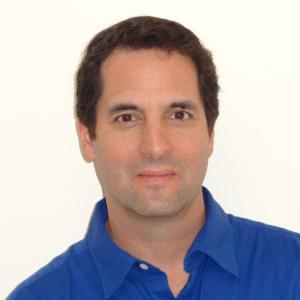
Stephen Balakirsky is the Chief Scientist for the Aerospace, Transportation & Advanced Systems Laboratory at the Georgia Tech Research Institute (GTRI), and the Director of Technical Initiatives at the Petit Institute for Bioengineering and Bioscience (IBB) at Georgia Tech.
Balakirsky’s research interests include robotic architectures, planning, bio-automation, robotic standards, and autonomous systems testing. His work in knowledge driven robotics couples real-time sensors and knowledge repositories to allow for flexibility and agility in robotic systems ranging from assembly and manufacturing systems to surveillance and logistics systems. The framework promotes software reuse and the ability to detect and correct for execution errors.
Brad Fain, Electronic Systems Laboratory (ELSYS) *Reappointment

Brad Fain has more than twenty-five years of experience in human performance. He directs Georgia Tech’s HomeLab research initiative and leads a team that is pioneering research into issues and products design to assist with successful aging in place. He joined Georgia Institute of Technology in 1992 and has extensive experience developing technologies, evaluation processes, and curriculum in the field of accessible design.
Fain has led or assisted in a variety of research programs, ranging from the design of fixed and rotary wing crew interfaces to applied research in the field of accessible design. Fain established the Accessibility Evaluation Facility at Georgia Tech and developed evaluation techniques designed to measure accessibility of products and services for people with disabilities.
Brent Wagner, Electro-Optical Systems Laboratory (EOSL)

Brent Wagner is a Principal Research Scientist. His research primarily focuses on optics, optical materials, nanomaterials, antenna arrays, and photonics. Wagner was part of the team that won GTRI’s 2021 IRAD of the Year for “Bullet Time,” which demonstrated GTRI's laser-based optical tracking technology ability to acquire and perform a precision 3D track of an outbound ballistic target in real time.
These recognitions highlight the significant impact of GTRI researchers in advancing technology and innovation across various sectors. Their work continues to support national defense, enhance State of Georgia economic development, improve the human condition, and educate future technology leaders.
FROM THE BOARD OF REGENTS OF THE UNIVERSITY SYSTEM OF GEORGIA POLICY MANUAL: Regents’ Researcher titles may be granted by the Board of Regents to outstanding full-time principal researchers of Augusta University, the Georgia Institute of Technology, Georgia State University, the University of Georgia, and, in special circumstances, other USG institutions. A Regents’ Researcher title shall be granted by the Board for a period of three years. Consideration of the renewal of the title for a second three-year period shall be given by the Board upon recommendation of the President of the USG institution, the Chancellor, and the Committee on Academic Affairs. After a period of six years, the Regents’ Researcher title shall be renewed at the discretion of the President of the USG institution.
Writer: Christopher Weems
GTRI Communications
Georgia Tech Research Institute
Atlanta, Georgia
The Georgia Tech Research Institute (GTRI) is the nonprofit, applied research division of the Georgia Institute of Technology (Georgia Tech). Founded in 1934 as the Engineering Experiment Station, GTRI has grown to more than 2,900 employees, supporting eight laboratories in over 20 locations around the country and performing more than $940 million of problem-solving research annually for government and industry. GTRI's renowned researchers combine science, engineering, economics, policy, and technical expertise to solve complex problems for the U.S. federal government, state, and industry.

Related News
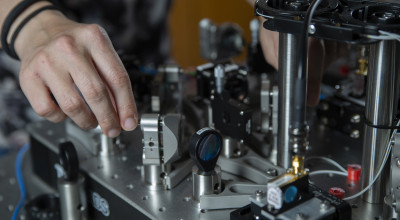
Trapped ions excited with a laser beam can be used to create entangled qubits in quantum information systems, but addressing several stationary pairs of ions in a trap requires multiple optical switches and complex controls.
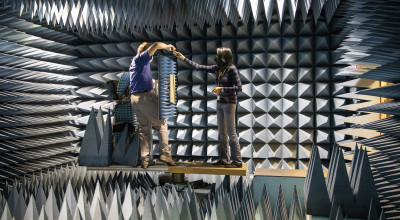
Digitally-reconfigurable modular hardware and software building blocks designed to work together are key components of GTRI’s Software-Defined Configurable RF Array (COBRA) initiative, which is intended to facilitate rapid development of low-cost phased-array radar systems for ground, airborne, spaceborne, electronic warfare, communication, and other applications.

A new and comprehensive database of healthcare claims paid in the state of Georgia will help identify disease trends, provide information for making public policy decisions, facilitate new research – and offer a way for consumers to determine the average cost of common procedures such as knee replacement or diagnostic testing such as MRIs.